
Ghee has always held a special place in Indian kitchens. From a simple bowl of dal and rice to festive sweets and traditional recipes, ghee adds a rich aroma, smooth texture and familiar homemade taste. Among the traditional varieties available today, A2 Bilona Ghee is gaining attention among people who want to bring time-honoured food practices into their everyday cooking. Krishnavi Ghee brings together the traditional character of A2 Cow Ghee and the heritage of Desi Bilona Ghee for families who appreciate authentic Indian flavours.
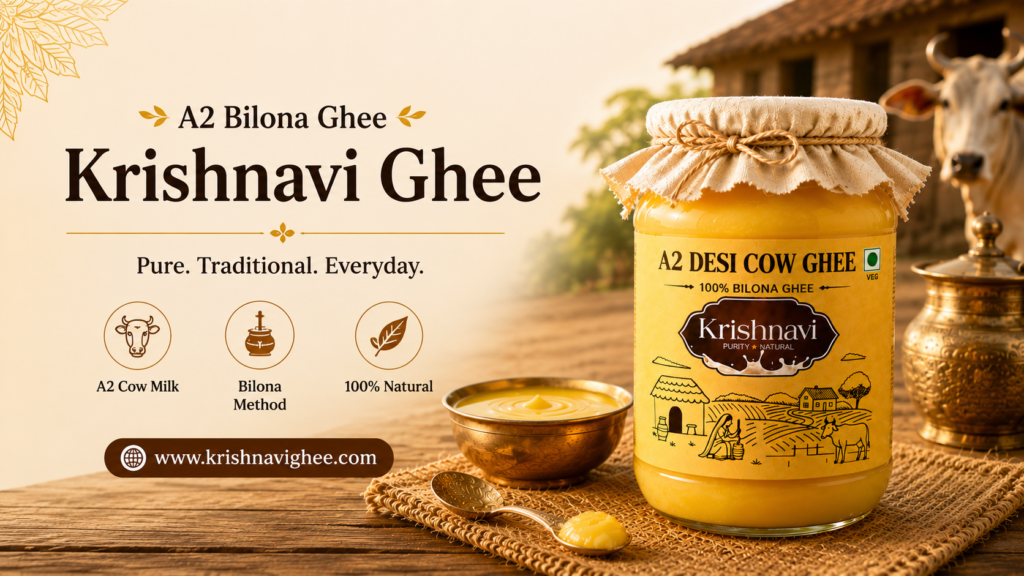
Table of Contents
What Is A2 Bilona Ghee
A2 Bilona Desi Ghee refers to ghee prepared from milk associated with indigenous desi cow breeds and made through the traditional Bilona process. In this method, milk is first converted into curd, the curd is traditionally churned to separate butter, and the butter is then gently heated to make ghee. This is different from methods that begin with separated cream. The Bilona process is valued for its traditional preparation and distinctive aroma, taste and texture.
The term A2 relates to the beta-casein protein type found in milk. Indigenous Indian cattle breeds can produce A2-type milk, although the exact composition depends on the individual animal and its genetics. Therefore, consumers looking for authentic A2 products should pay attention to the sourcing and product information provided by the brand.
Why Krishnavi Ghee Fits Everyday Indian Cooking
Krishnavi Ghee is designed for the kind of cooking that happens every day in Indian homes. Ghee can be used for sautéing ingredients, preparing tadka, roasting spices, making parathas and adding a finishing touch to cooked food. Its rich aroma can turn a simple meal into something that feels more traditional and comforting.
For breakfast, a small amount of ghee can be used while preparing paratha or added over hot roti. At lunchtime, it can be used for dal tadka, rice or khichdi. During dinner, it can complement vegetables, pulao and other homemade dishes. Because of its versatile character, A2 Cow Ghee can become a regular part of the kitchen rather than something reserved only for special occasions.
The appeal of Desi Bilona Ghee also comes from its connection with traditional Indian food culture. The slow, curd-based preparation gives traditionally made ghee a characteristic aroma and naturally rich flavour. Its texture can also change according to temperature, becoming more liquid in warmer conditions and firmer in cooler weather.
A2 Bilona Ghee for Traditional Recipes
Indian cuisine has countless recipes where ghee is more than just a cooking ingredient. It contributes to the overall aroma and traditional taste of the dish. A2 Desi Bilona Ghee can be used in homemade halwa, ladoos, besan preparations, moong dal halwa and other Indian sweets where ghee plays an important role.
It also works beautifully with simple traditional foods. Hot khichdi topped with a spoonful of ghee is a classic combination, while ghee on freshly prepared roti, dal or rice can add a satisfying richness. During festivals, families often use ghee while preparing sweets and savoury dishes because its aroma complements traditional spices and ingredients.
For people who enjoy recreating recipes inspired by their grandparents’ kitchens, Krishnavi Ghee can help bring that familiar ghee-based flavour into modern everyday meals.
What Makes Desi Bilona Ghee Special
The word Bilona is associated with the traditional churning process used to separate butter from cultured curd. In a conventional Bilona-style process, milk is converted into curd, the curd is churned to obtain butter, and that butter is subsequently heated to produce ghee.
This traditional approach requires more time and care than faster industrial methods. That is one reason Bilona ghee is generally positioned as a premium traditional food product. The resulting ghee is appreciated for its characteristic fragrance, flavour and naturally grainy texture when set.
For consumers, however, the most important consideration is transparency. When choosing A2 Cow Ghee, it is useful to check the product label, ingredient information, sourcing claims and manufacturing details rather than relying only on words such as “pure” or “natural.”
How to Use Krishnavi Ghee in Your Daily Kitchen
Using Krishnavi Ghee does not require changing your entire cooking routine. It can simply become part of the recipes you already prepare. Use it for tadka when making dal, brush it over hot rotis, mix it with rice or use it while preparing traditional sweets.
The quantity you use should depend on your individual dietary needs and overall eating pattern. Ghee is a concentrated source of fat, so enjoying it as part of a balanced diet is the sensible approach. The traditional nature of a product does not mean that unlimited consumption is appropriate.
Proper storage is also important. Keep ghee in a clean, dry container away from moisture and direct sunlight. Always use a clean, dry spoon and keep the container properly closed after use.
Choosing the Right Ghee for Your Family
With increasing interest in traditional foods, consumers have more choices than ever. When comparing A2 Bilona Ghee, look beyond attractive packaging and marketing claims. Consider whether the product clearly explains its milk source, preparation method, ingredients and storage instructions.
A good traditional ghee should fit naturally into your cooking habits while offering the taste and character you expect from traditionally prepared ghee. For households that enjoy Indian cuisine, Desi Bilona Ghee can be particularly useful because it works across everyday meals, festive cooking and traditional recipes.
Conclusion
A2 Bilona Ghee represents a connection between traditional Indian food practices and modern everyday kitchens. From dal, rice and roti to khichdi, paratha and festive sweets, ghee has a versatile role in Indian cooking. Krishnavi Ghee can be enjoyed as part of this culinary tradition, bringing the rich aroma and familiar taste associated with traditionally prepared ghee to everyday meals.
If you are looking for A2 Cow Desi Ghee or Desi Bilona Ghee for your kitchen, focus on transparent product information, authentic preparation practices and quality ingredients. With thoughtful use and balanced eating habits, Krishnavi Ghee can be a flavorful addition to both simple daily meals and cherished traditional recipes.
FAQs
1. What is A2 Bilona Ghee?
A2 Bilona Ghee is traditionally prepared ghee associated with A2-type milk from suitable indigenous cow breeds and made using the Bilona process. The traditional process involves converting milk into curd, churning the curd to obtain butter and then heating the butter to produce ghee.
2. Is A2 Cow Ghee suitable for everyday cooking?
Yes, ghee can be used for many everyday cooking applications such as tadka, sautéing, roasting, paratha, roti, rice and traditional recipes. As with other fats, it is best consumed in appropriate quantities as part of a balanced diet.
3. What is the difference between A2 Cow Desi Ghee and Desi Bilona Ghee?
A2 describes the type of beta-casein protein associated with the milk, while Bilona describes the traditional method used to prepare ghee. Therefore, the terms refer to different aspects of the product and can be used together when the milk source and preparation method meet those descriptions.
Yes. Ghee is commonly used in recipes such as dal, khichdi, paratha, halwa, ladoos, rice dishes and many other traditional preparations. Its rich aroma can enhance the flavour of both everyday and festive foods.
5. Why does Bilona Ghee sometimes become grainy?
A naturally grainy or granular texture can develop as ghee cools and its fat crystallises. Temperature can also affect the consistency, so traditionally prepared ghee may be liquid during warmer weather and firmer during cooler conditions.
6. How should A2 Bilona Ghee be stored?
Store ghee in a clean, dry, tightly closed container away from direct sunlight, heat and moisture. Use a clean, dry spoon each time to help maintain its quality and freshness.